PRF vs PDGF vs PDRN vs Exosomes: What to Use After Microneedling and Laser Treatments
Who You Invite Into the Skin After a Procedure Matters More Than You Think
A story about open doors, bad timing, and who you let inside
A skin procedure is not the end of a treatment. It is the opening scene.
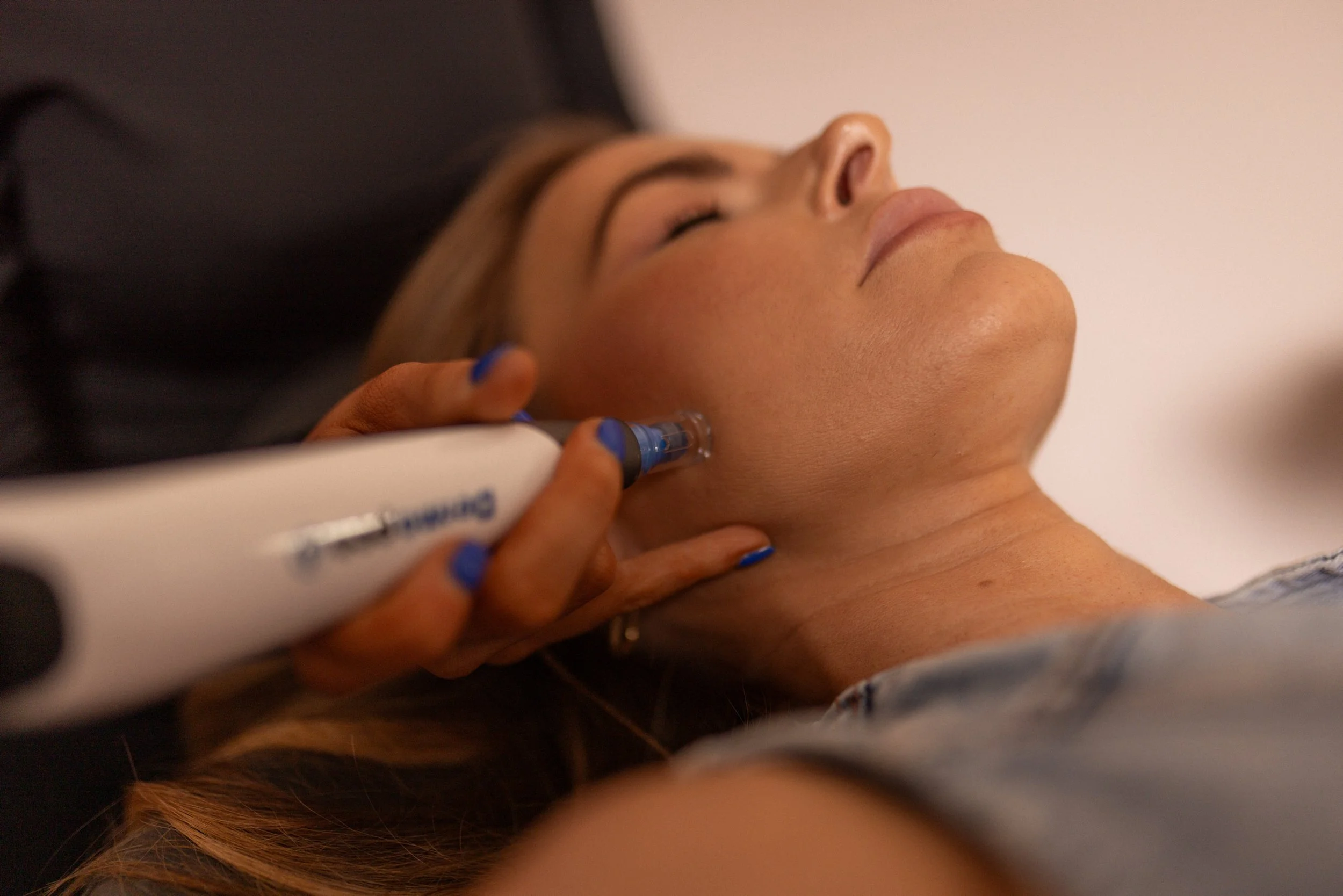
Microneedling, Erbium YAG and LaseMD Ultra all do the same critical thing in different ways. They open doors.
They disrupt the skin barrier on purpose. Channels are created. Inflammation is triggered. Cells are alert and listening.
This is the one moment your skin is paying full attention.
What you apply next is not skincare. It’s instruction.
Now let’s talk about who you invite in.
First, what all these treatments have in common
Microneedling, Erbium YAG, and LaseMD Ultra sound very different, but biologically they do the same thing.
They:
Create controlled injury
Trigger inflammation
Tell skin cells that repair needs to begin
That early inflammatory phase is intentional and necessary. It is how skin knows to produce new collagen, repair tissue, and remodel itself.
At the same time, those procedures temporarily increase how receptive the skin is to topical ingredients. Products can reach deeper. Cells are listening. Receptors are active.
This creates a narrow but powerful opportunity.
Not for everyday skincare.
For biological influence.
PRF: giving skin the raw materials
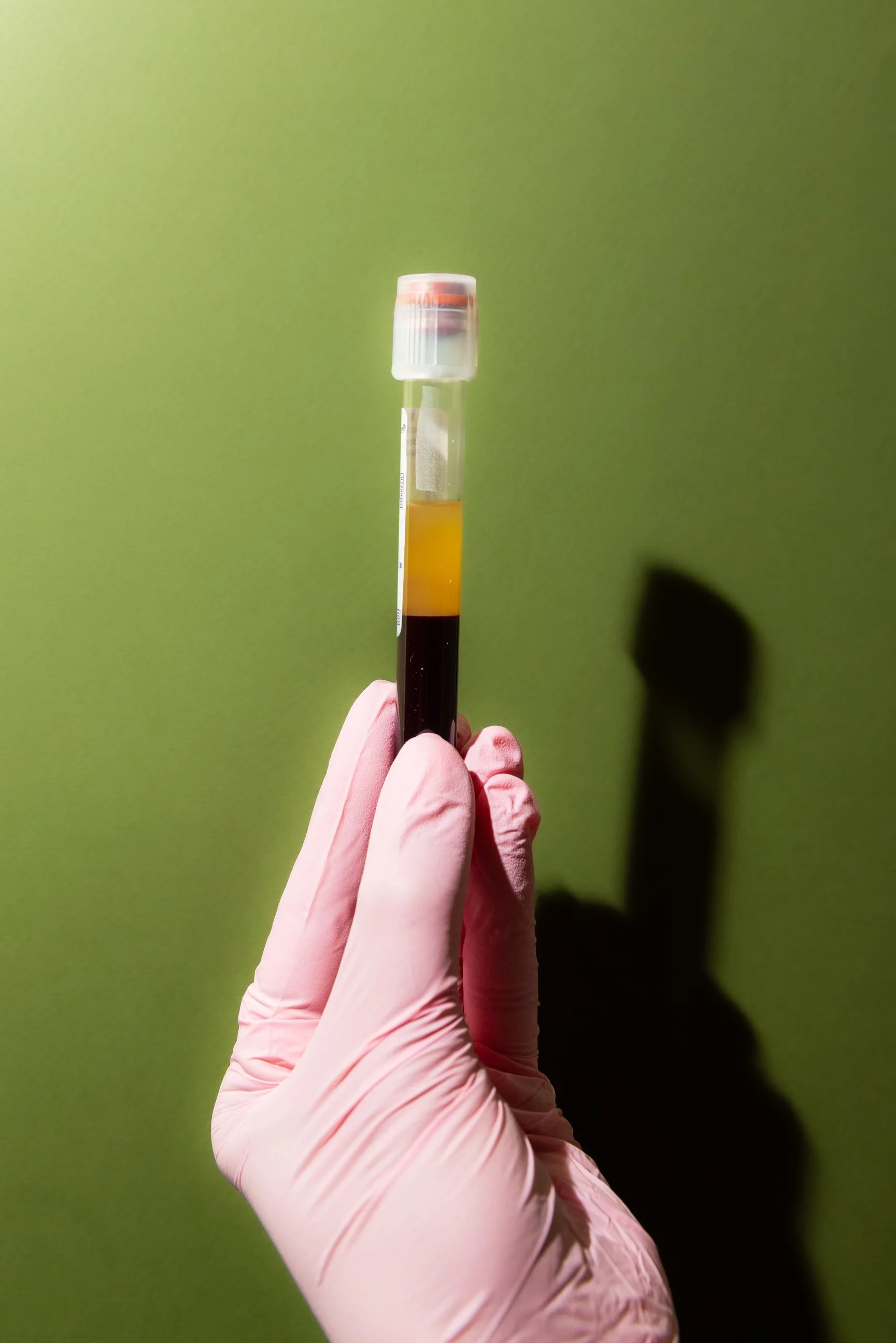
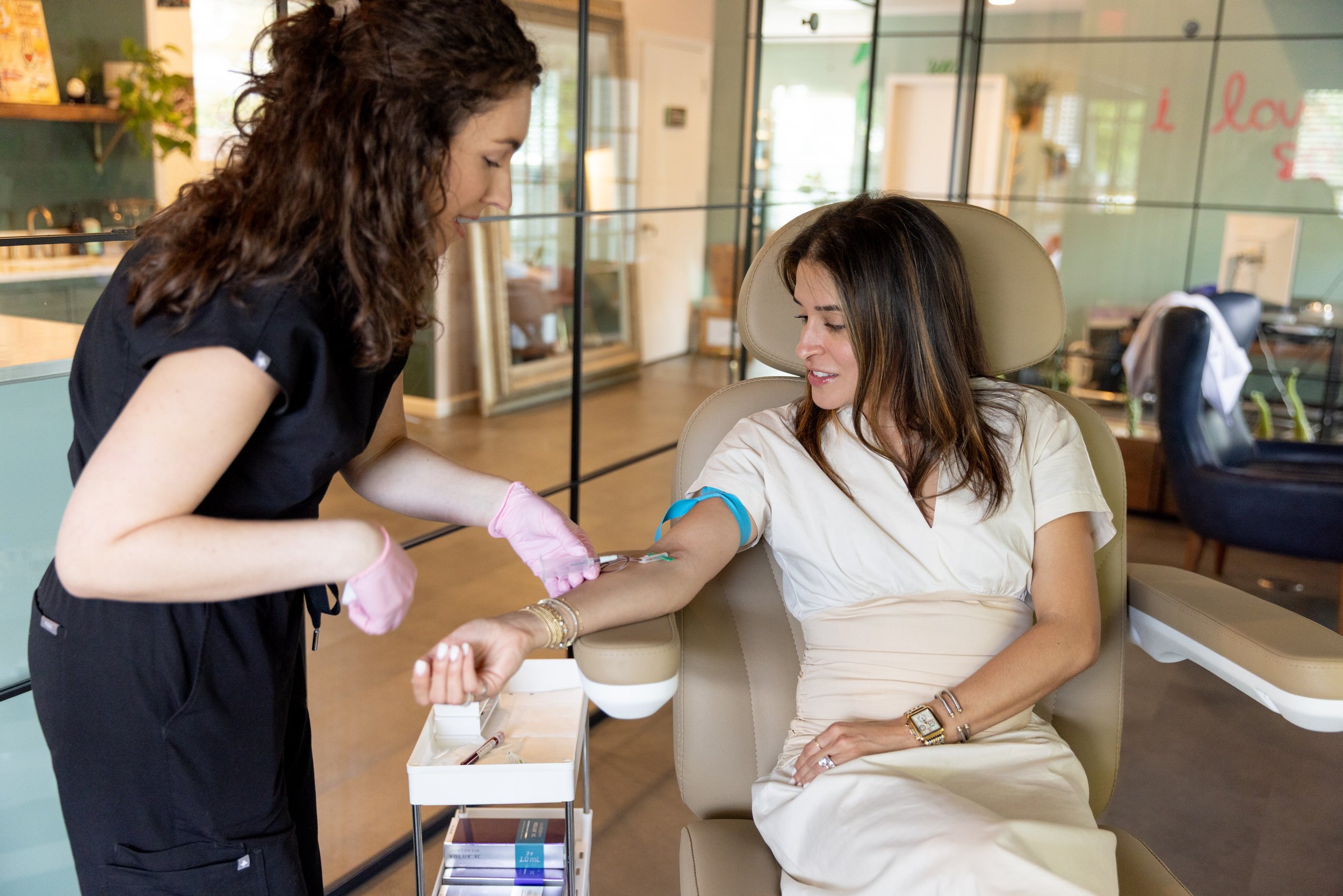
PRF comes from your own blood. It contains platelets suspended in fibrin, along with a naturally occurring mix of growth factors that your body already uses to heal wounds.
When PRF is applied after a procedure, it moves into the micro-channels created by the treatment and releases these growth factors gradually as the fibrin breaks down.
This supports the healing process that is already underway.
Here is the key distinction.
PRF does not guide or fine-tune healing. It supplies biological signals and allows the skin to respond based on its existing health and regulation.
In skin that is already balanced and responsive, this often leads to excellent results. In skin with underlying issues such as chronic inflammation, impaired barrier function, or slower cellular responsiveness, results can be more variable because PRF does not correct those imbalances. It simply supports the process already in motion.
PRF is best understood as supportive, natural, and non-directive.
It provides the ingredients. It does not choose the recipe.
PDGF
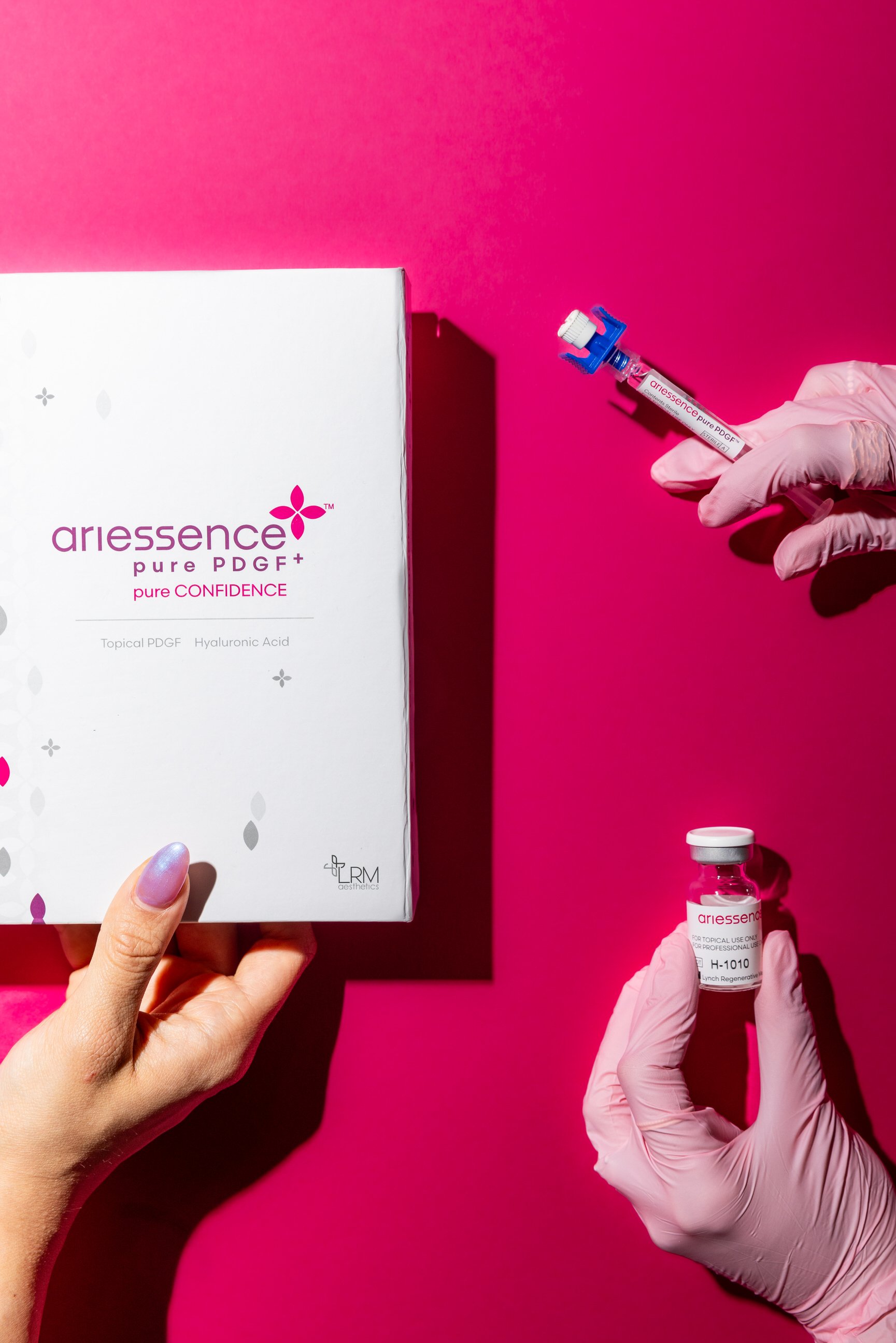
Platelete-derived growth factors from Ariessence
PDGF: sending one clear instruction
PDGF stands for platelet-derived growth factor, but unlike PRF, it is not a mixture.
It is one specific signal.
Fibroblasts, the cells responsible for producing collagen, have receptors designed to recognize PDGF immediately. When PDGF binds to those receptors, it sends a clear instruction.
Begin repair. Produce collagen. Rebuild tissue.
When applied after a procedure, PDGF benefits from increased access to these receptors. The signal is direct and consistent.
This is why PDGF often feels more predictable than PRF.
It does not rely on the skin to sort through multiple messages. It delivers one focused command and steps aside.
PDGF does not manage inflammation and does not improve overall cell health. Its role is targeted and specific.
It tells the builders to start building.
PDRN: helping damaged cells recover first
PDRN works differently from both PRF and PDGF.
It does not stimulate collagen production directly. Instead, it helps damaged or stressed cells repair themselves so they can function normally again.
After procedures, skin cells experience DNA stress, inflammation, and temporary metabolic strain. PDRN supports recovery at a foundational level by supplying nucleotides for DNA repair and activating pathways that calm inflammation and improve cell survival.
This makes PDRN especially useful for skin that is:
Sensitive or reactive
Acne-prone
Rosacea-prone
Easily inflamed or slow to recover
PDRN does not push cells to do more.
It helps them do better.
Before skin can rebuild well, it has to stabilize.
Exosomes: changing how healing is coordinated
Exosomes are the hardest to understand because they do not add visible ingredients or stimulate obvious activity.
They are tiny communication packages released by cells. Inside are signaling molecules that influence how other cells behave by altering gene expression.
When exosomes are applied after a procedure, they are absorbed by skin cells during this heightened receptive window. Rather than telling cells what to do immediately, they influence how cells prioritize and coordinate healing over time.
The result is not louder healing.
It is more organized healing.
Inflammation tends to resolve more efficiently.
Collagen is laid down more evenly.
Cells communicate instead of working in isolation.
Exosomes do not make skin work harder.
They help skin work smarter.
Why timing and delivery change everything
On intact skin, many advanced ingredients struggle to penetrate meaningfully.
After microneedling or laser treatments, the barrier is temporarily disrupted. Channels exist. Cells are exposed. Uptake is dramatically improved.
This is why the same product behaves very differently when applied post-procedure versus in a daily routine.
It’s not just what you use. It’s when you use it.
Putting it all together
All of these options support healing. None of them are interchangeable.
They act at different points in the healing process.
PRF supplies natural healing signals without directing them
PDGF delivers a focused collagen-building instruction
PDRN stabilizes and repairs stressed cells
Exosomes influence how cells communicate and coordinate repair
The procedure opens the door. The add-on shapes the response.
And the response is what determines whether results look rough or refined, uneven or balanced, short-lived or long-lasting.
So… which one should you choose?
There is no single best add-on. There is only the one that best matches how your skin heals and what you are trying to improve.
Think of this less as upgrading a treatment and more as choosing the right recovery strategy.
Choose PRF if:
You want the most natural, biologic option
You like the idea of using your own blood products
Your skin generally heals well and is not overly reactive
You want broad healing support without over-engineering it
Cost: $300
PRF is ideal for patients who are healthy healers and want to support the body’s normal repair process without directing it too heavily.
Choose PDGF if:
Your primary goal is collagen and structural improvement
You want consistency and predictability
You are focused on texture, firmness, and long-term remodeling
Cost: $400
PDGF makes sense when you want a clear, targeted signal sent to fibroblasts to rebuild.
Choose PDRN if:
Your skin is sensitive, reactive, or acne-prone
You tend to get red, inflamed, or slow-to-recover after treatments
You want better healing quality, not more stimulation
Cost: $225
PDRN is about stabilizing skin first so rebuilding happens more smoothly.
Choose Exosomes if:
You want the most advanced regenerative support
You are doing a more aggressive treatment or stacking procedures
You care about refinement, not just stimulation
You want to optimize how your skin heals, not just how fast
Cost: $350
Exosomes are best when the goal is coordinated, high-quality healing.
The final takeaway
Your procedure creates the opportunity. Your add-on shapes the outcome.
Transparency matters, and so does choosing what actually fits your skin, your goals, and your recovery style.
This is not about upselling. It is about matching biology to biology.
And that is where the best results come from.
FAQ
-
No. Microneedling and laser treatments work on their own by triggering your skin’s natural healing response. Add-ons are optional. They are used to support, guide, or optimize how your skin heals, not to make the treatment effective in the first place.
-
Sometimes, yes. Some add-ons complement each other rather than overlap. For example, a calming option like PDRN may pair well with a collagen-focused signal like PDGF. Other combinations may be redundant. This is something your provider should help you decide based on your skin and the procedure.
-
No. These products influence healing quality, not the need for repetition. Collagen remodeling and skin change still require time and often multiple sessions. Add-ons help you get more out of each treatment, not skip the process.
-
They are applied immediately after the procedure, while the skin barrier is temporarily open and cells are most receptive. This timing is what allows them to behave differently than they would in a daily skincare routine.
-
We use ExoVex, which are umbilical cord–derived exosomes.
They are purified, cell-free extracellular vesicles formulated for topical, post-procedure use. Umbilical-derived exosomes are used because they contain high concentrations of regenerative signaling molecules associated with wound healing, inflammation modulation, and tissue repair.
ExoVex contains no live cells and does not alter DNA.
-
PRF is derived from your own blood and does not require lab manufacturing or purification beyond processing. PDGF and exosomes involve advanced sourcing, isolation, and stabilization, which increases cost.
-
Because that one signal is isolated, stabilized, and delivered in a highly targeted way. You are paying for precision and predictability, not quantity.
-
No. While PDRN is especially helpful for reactive or inflamed skin, it can also benefit anyone who wants smoother healing and improved recovery quality, particularly after more aggressive treatments.